Horse fencing in Mackay: what this page covers
Horse fencing and acreage fencing around Mackay covers the paddock fences on rural residential blocks and small holdings, where the neighbour may be cane, grazing land or another house block. This page explains what we found on the zone, on the Queensland dividing fence Act's wording for land of more than half a hectare, on wire and electric options, and on quote checks. It also says where the sources stop, which is often. We are a referral service: your enquiry is passed to a local contractor, who does the work and is responsible for holding any licence or registration that applies.
Stock fences for working cattle country are on the cattle page. This page is the horse and lifestyle version.
Where lifestyle blocks sit
No census page we read gives lot sizes, so the lifestyle block angle is inference only. What the census does show is that separate houses made up 98.9 per cent of dwellings in Marian (Census QuickStats for Marian), and across the localities we looked at the share ran from 77.7 to 98.9 per cent. That fits a region with many house blocks, and it does not tell us how big they are or how many keep horses.
Mackay Regional Council's rural residential zone card says the zone "provides for low intensity residential living on large semi-rural sites", and that "Rural activities such as cropping and grazing are limited in intensity to minimise residential amenity impacts" (rural residential zone card). The card has a heading for lot size but gives no figures, and it does not mention fences. Zone questions for your block are for the council. The Mackay and city fringe page and the Pioneer Valley page have the local figures.
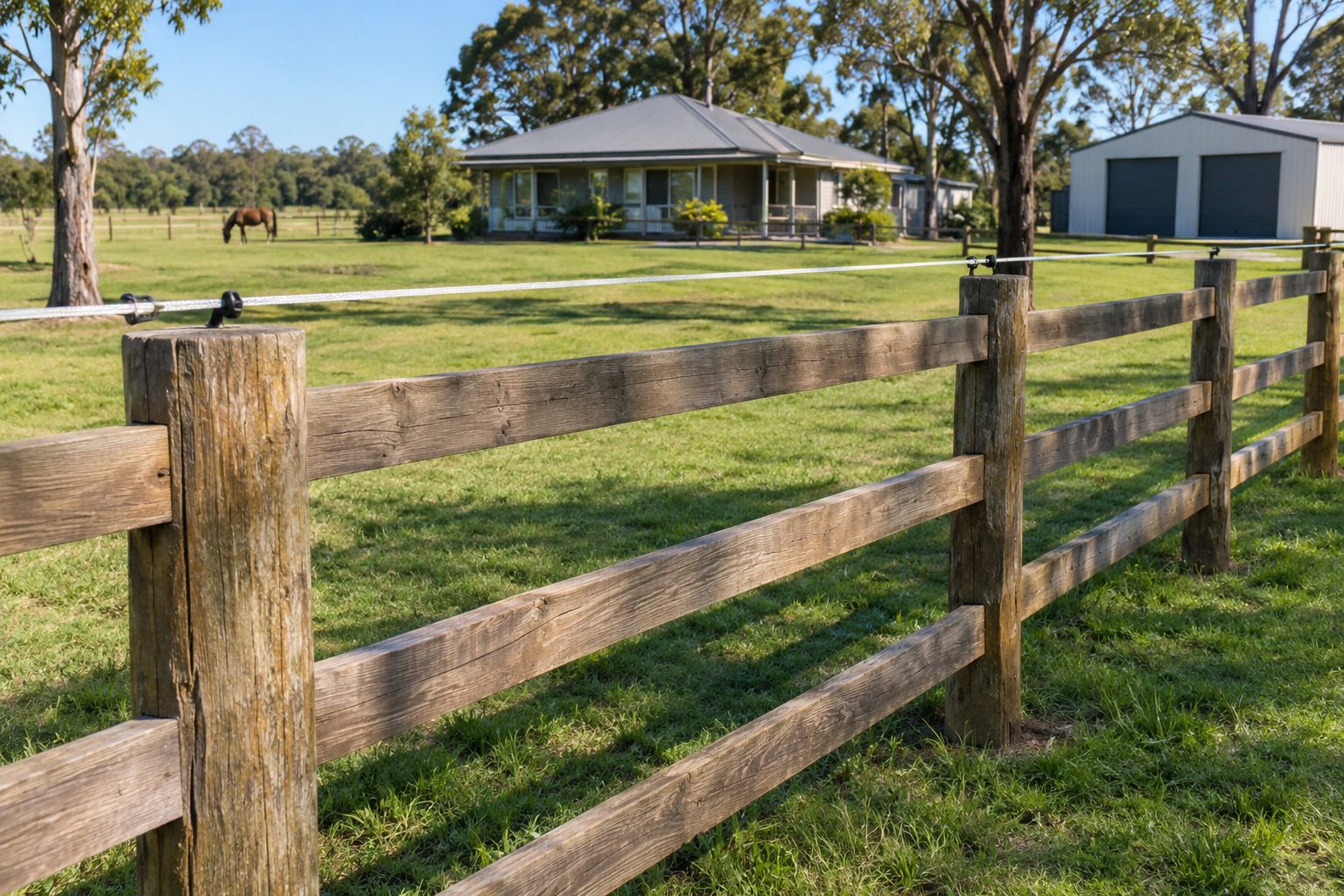
What the Act says about land over half a hectare
The Neighbourhood Disputes (Dividing Fences and Trees) Act 2011, in the version we found, in force from 1 August 2025, uses defined terms in section 18. "Prescribed rural land is agricultural land, pastoral land or other rural land of more than half a hectare", and the definition continues, so read section 18 for the rest. "Residential land is land, other than agricultural land and pastoral land, used primarily for residential purposes." For residential land, section 13(1)(a) says a sufficient fence "is between a minimum of 0.5m and a maximum of 1.8m in height".
The fragments we read do not use the words lifestyle block. Whether a horse paddock on a block of more than half a hectare counts as residential, pastoral or other rural land is not something we interpret. The Act also has a section 22, headed "Contribution: parcel of prescribed rural land adjoining residential development". How sections 13 and 22 apply to a lifestyle block beside cane or grazing land is unresolved on the pages we could read, and we do not interpret it. Section 21(1) makes adjoining owners liable to contribute equally to a sufficient dividing fence. Ask QCAT, the council or a solicitor before you serve or answer a notice. Later amendments were not checked. The dividing fence law page sets out the words.
Wire, rails and electric tape
We found no Australian horse fencing standard and no guidance on barbed wire for horses, so this site gives no horse-specific design rule. What the sources do say is narrower. One regional fact sheet says replacing the top wire of a stock fence with plain wire reduces harm to wildlife such as bats, gliders and birds, and that temporary electric fencing "requires constant monitoring and maintenance to maintain voltage, tension and prevent breaches" (regional fence selection fact sheet). It lists vegetation touching wires, broken wires or insulators, and poor earthing, connections or insulation as common faults.
One manufacturer's page, which is manufacturer advice, says dry conditions make the earth system less effective, with weaker shocks. It recommends a return earth design for permanent fences in Australia, and suggests considering switching the energiser off on days of severe or higher fire risk (manufacturer page on electric fences in dry conditions). We found no Queensland electrical safety rule for electric fences. The electric fencing guide covers the parts, the earth and the wet and dry months. If a quote includes an electric tape on a rail fence, ask who supplies and installs the energiser and earth, and who maintains them.
Council approval, clearing and services
Whether a rural fence on a rural residential block needs council approval is not something we can say. The Mackay planning pages we found do not mention fences, and we found no council fence approval rules for Mackay. Ask the council. Clearing a line may have limits that depend on the vegetation category, covered on the creeks, roads and vegetation page. A carrier's media release we read treats driving in a star picket as ground-breaking work and says to dial 1100 in business hours, so ask whether an underground services check is part of the job.
Checks on a horse or acreage quote
- What is on the other side. Cane, grazing land, another house block or a road. Tell the contractor, because the neighbour questions above depend on it.
- The wire and top rail. Plain or barbed, rails or wire, the number of strands, and why they suit horses. Ask for the reasoning in writing.
- Strainers, gates and posts. How many, what type and what treatment or galvanising.
- Electric parts. Energiser, insulators, earth stakes and who maintains them.
- Licence or registration. Which one is held. Whether a fence on a rural residential block needs a QBCC licence is not something the pages we found settle, and a 2017 explanatory text says the farm fence exclusion was not intended to apply to fencing work associated with a residence (explanatory notes). The licence page has the detail.
The cost guide lists the lines a quote should itemise. We publish no prices.
What this page cannot do
It cannot design a horse paddock fence, because we found no Australian horse fencing standard and no guidance on barbed wire for horses. It cannot say how the dividing fence Act applies to a lifestyle block beside cane or grazing land, whether council approval is needed, or which licence or registration a contractor needs. The wire and earth points come from one regional fact sheet and one manufacturer's page, and each should be read that way. It gives no price or lifespan. Ask the contractor, the council, QCAT and QBCC for your block.
Check the current rules before you rely on this
This page describes the rural residential zone wording, the Queensland dividing fence Act's terms for land over half a hectare and the wire and electric points in two sources. It describes the rules in general terms as they stood in November 2026. Standards, forms, thresholds and fines change.
The authoritative sources are Mackay Regional Council, rural residential zone card (no lot sizes, no fences), Neighbourhood Disputes (Dividing Fences and Trees) Act 2011 (Qld), version in force from 1 August 2025, A regional natural resource management body, fence selection fact sheet, August 2023 (general information, not mandatory standards) and A manufacturer's page, electric fencing in dry conditions (manufacturer advice). Where anything here differs from those sources, they are right and we are not.
We are not fencing contractors, builders, regulators or lawyers. For what applies to your fence, ask the contractor which licence or registration they hold and check it on the QBCC register (139 333), then ask the council that covers the land: Mackay Regional Council (1300 622 529), Whitsunday Regional Council (1300 972 753) or Isaac Regional Council (contact details on its website).
Accurate at the time of writing, November 2026. Always check the source before relying on it.